
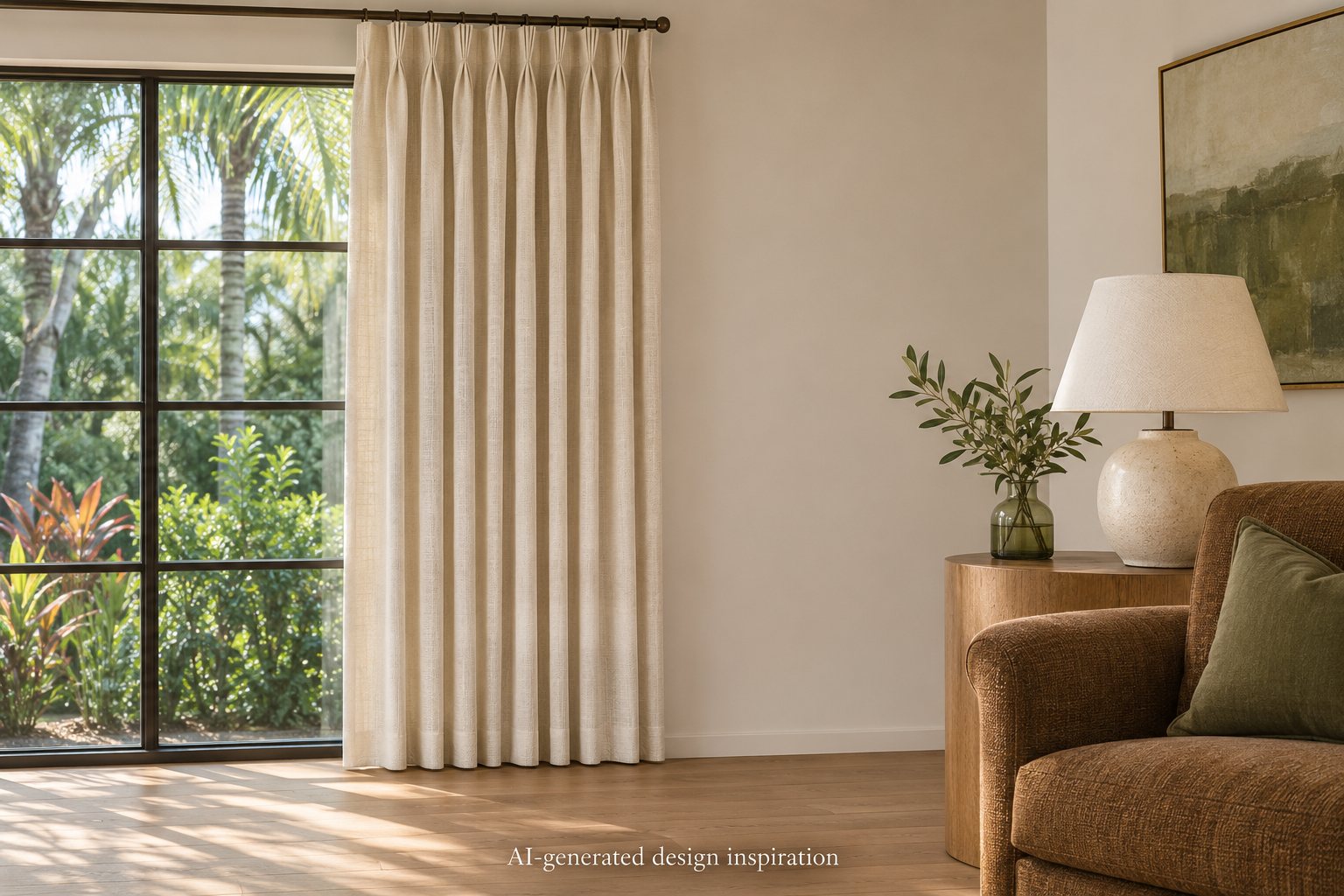
A reading chair beside a window can look perfectly placed until the curtains open. Fabric needs somewhere to gather, and that space belongs in the room plan from the beginning.
"Stack-back" is the space drapery occupies when it is drawn open. It is easy to focus on the width of the glass and overlook the fabric resting beside it. The space required depends on the fabric, the lining, the fullness, the heading and the hardware, so no single number in inches settles every window.
Start with the open position
Where should the panels rest? Is there wall space on both sides, or would one side suit the room better? Consider the door handle, nearby furniture and the path to a terrace before choosing the arrangement.
Then picture the curtains closed. The chair should stay comfortable to use, and the fabric should travel without catching a chair arm, a lamp or a side table. Moving a chair a few inches may be simpler than forcing a treatment into a crowded corner.
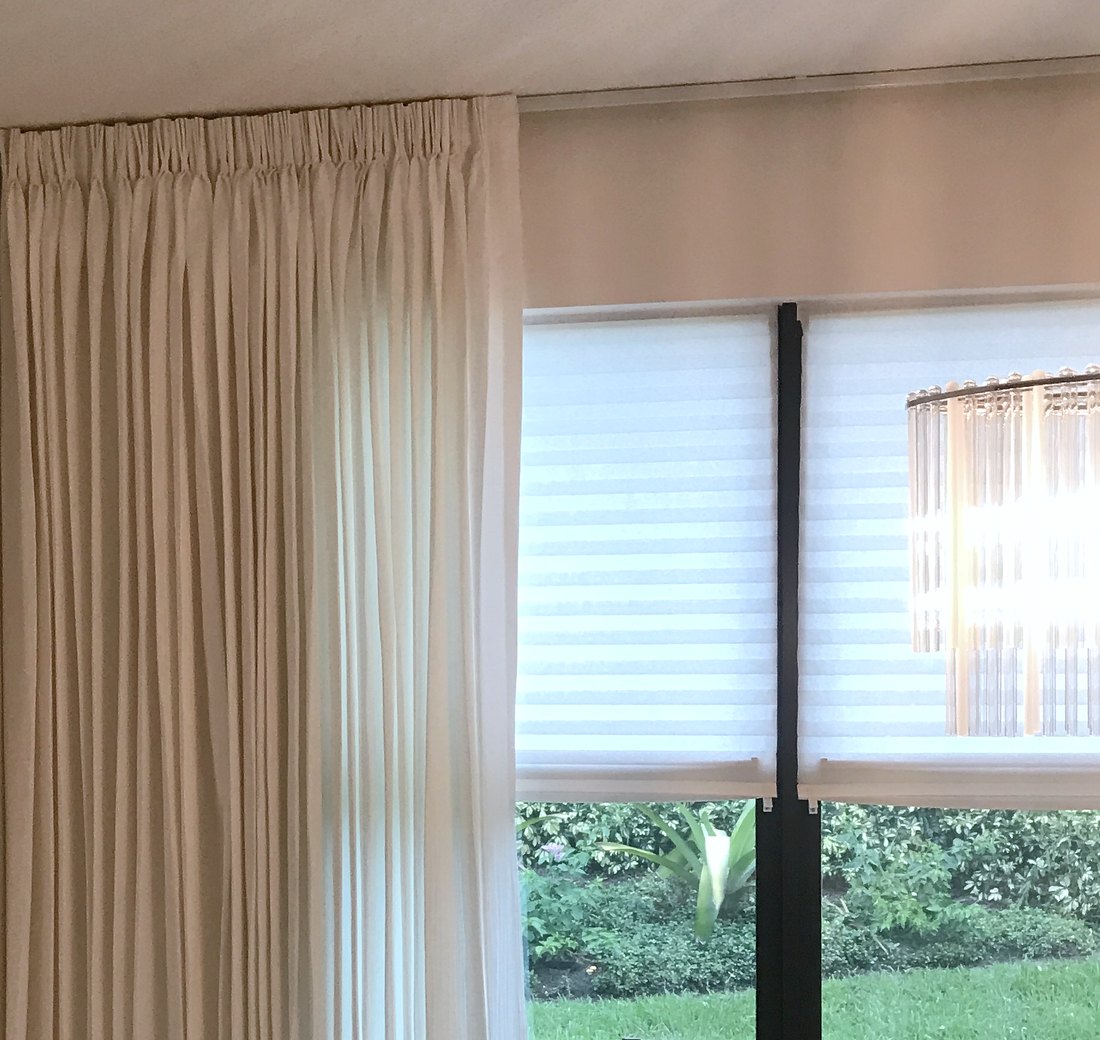
Decide what the panels need to do
Stationary side panels frame a window but are not meant to travel across it. Functional drapery opens and closes. That difference matters: a beautiful stationary arrangement may still need a separate shade for privacy or light control.
Bring photographs of the whole wall, not only the glass. Include nearby furniture and the direction the doors open. Ask to see the fully open and fully closed positions before the hardware and fabric are finalized.
Beautiful folds should feel at home in ordinary moments: reaching for a book, opening the door, drawing the curtains at night.
Let the hardware do its part
The rod or track decides how smoothly the fabric moves and where it can rest. Returns that wrap toward the wall, a track that carries the panels clear of the glass, holdbacks that keep a panel in place: these quiet details are what make a treatment work every day.