
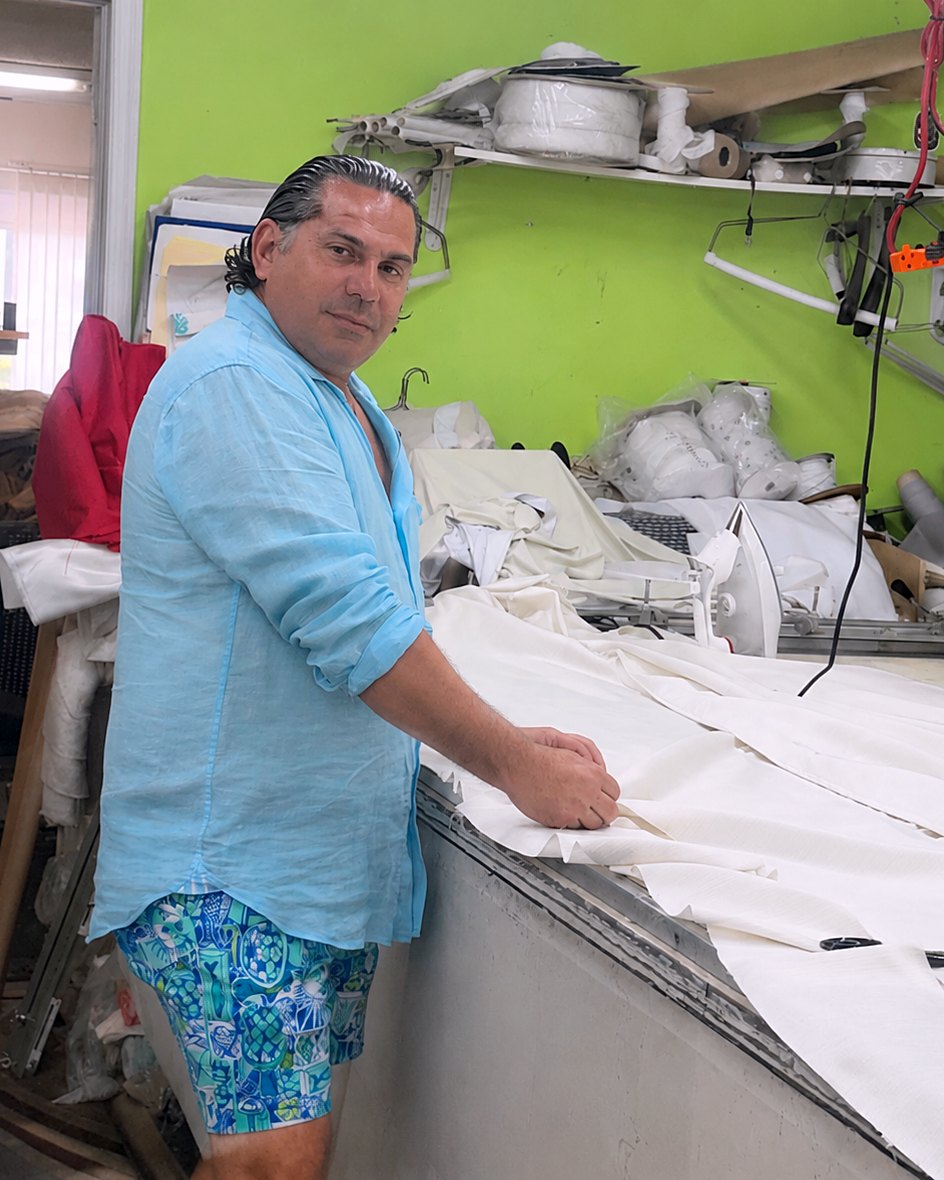
How did Boca Raton Draperies begin?
It is a family business. Judith and I built it together: she leads the design side, and you will usually find me in the workroom. We wanted a place in Boca Raton where draperies are actually made, not just ordered from a catalog.
What does "made by hand" mean at BRD?
Every custom drapery is measured in your home, at the real window, and then cut and sewn on our own tables here on NW 28th Street. Shades, shutters and hardware we select and fit for each opening. When the work is in your own workroom, you see every pleat and every hem before it leaves.
"The Florida light changes everything. That is why we bring the samples to your house."
Which drapery style do you recommend most?
It depends on the room. Pinch pleat when you want something tailored and classic. Ripplefold for wide glass and sliding doors: it stacks clean, and it is easy to plan with Somfy motorization. And sheers almost everywhere in Florida. They soften the sun and you keep your view.
What is the most common mistake you see in South Florida windows?
Choosing a fabric from a tiny swatch under showroom lights. A color that looks warm in a store can look completely different with the afternoon sun behind it, so we always compare samples at the window. The second one: a solar shade alone in a living room or bedroom. During the day it is perfect, but at night, with the lamps on, people outside can see in. Add a drapery or a second shade for privacy.
Cornices and valances: are they back?
The right top treatment finishes a window like a frame finishes a painting. A cornice or a valance hides the hardware, adds height and makes a simple panel look custom. In rooms with tall ceilings, it is one of my favorite details.
Why do you talk so much about hardware?
People see the fabric, but the rod or the track decides how the drapery moves every single day. A heavy lined panel needs different hardware than a light sheer. We choose it for the weight of the fabric and the way the drapery has to open and close.
What should a homeowner do before calling you?
Take a photo of the whole wall, not just the window, and think about how you use the room: morning coffee, a movie at night, privacy from the neighbors, the view you want to keep. Then we come with samples, measure everything and design it together. That is where every good project starts.
What a well-made drapery shows
- Measurements taken in your home, at the actual window, before anything is cut.
- Enough fullness, so the folds look generous open and closed.
- Even pleats and straight, consistent hems from panel to panel.
- Patterns matched across the seams and placed with care.
- Hardware chosen for the weight of the fabric and the way the drapery needs to move.