Give each layer a job
Layering works best when every element has a purpose. A drapery can frame the opening and bring softness to the room. A separate shade can handle a different level of light control. Begin with what you need at breakfast, in the afternoon and when you turn the lights on at night.
Start with the room
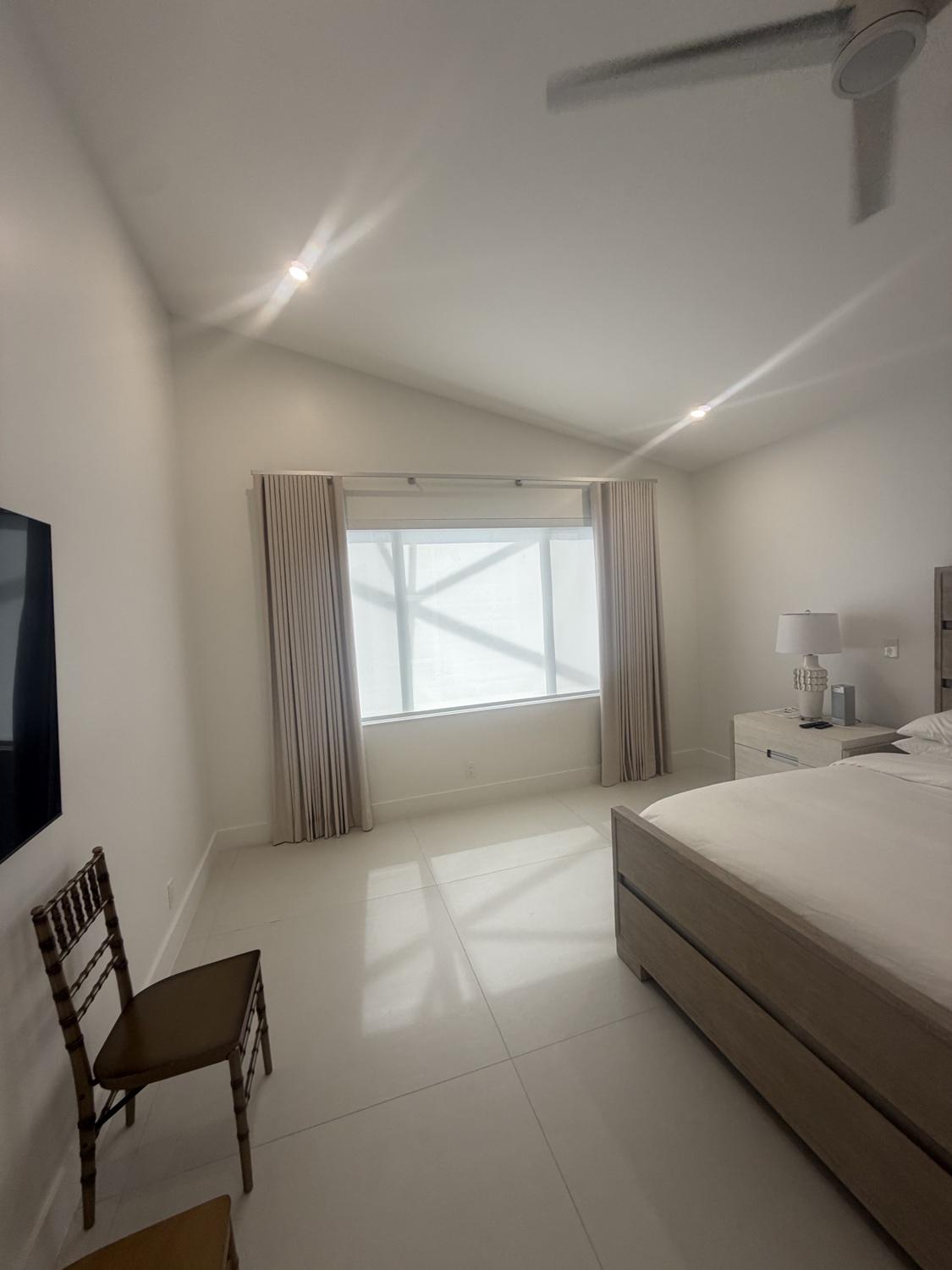
For a bedroom, discuss the darkness you want for sleeping. For a living room, consider glare on a screen and the view you want to keep. For a sliding door, access may be just as important as light. These priorities should guide the combination rather than choosing two attractive fabrics independently.
Make room for movement
The layers must operate without rubbing or catching. Window handles, shade brackets, projecting trim and drapery hardware all occupy space. When a shade sits inside the opening, verify the available depth. When both layers sit outside it, plan the order and projection of the hardware together.
Keep the composition calm
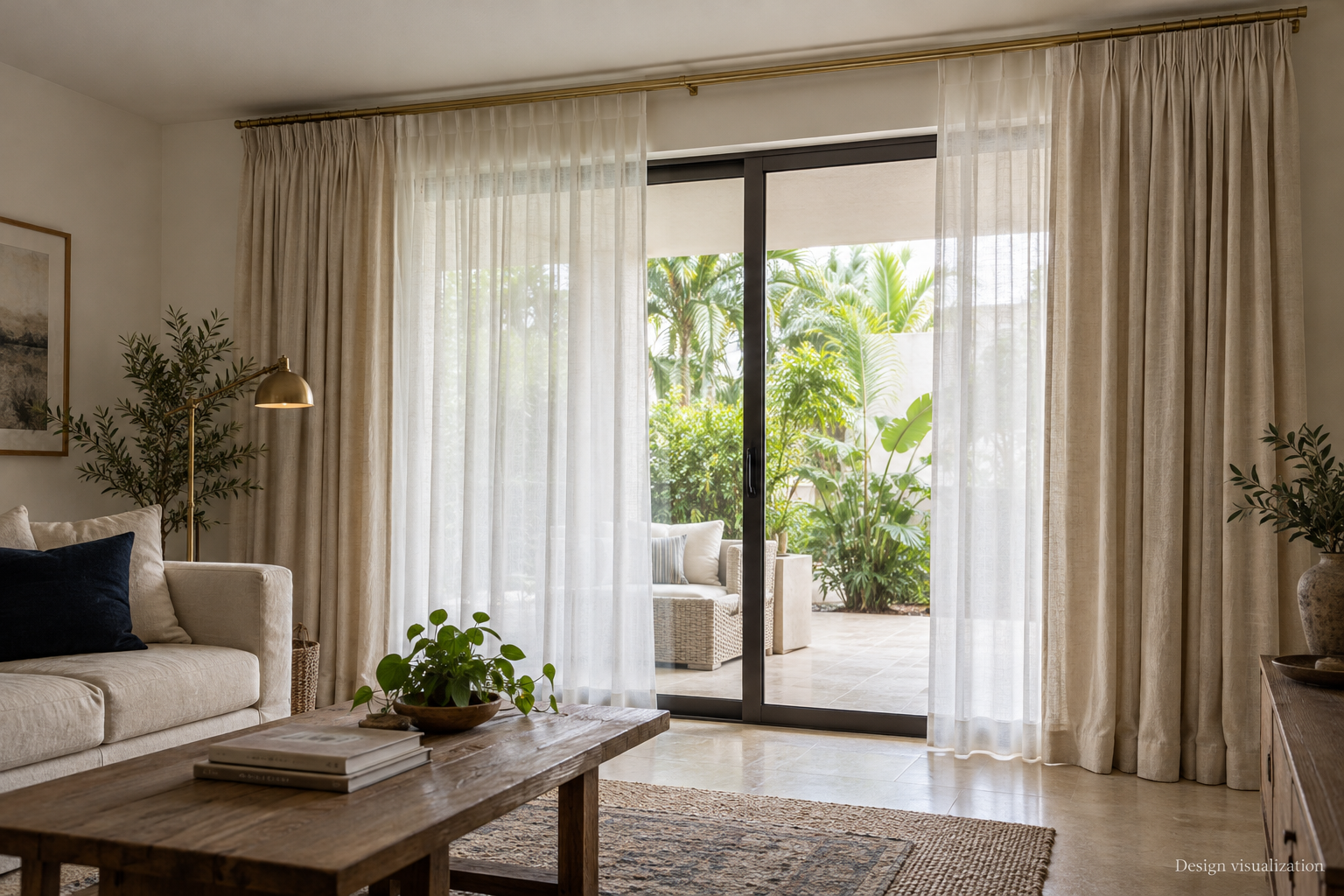
A quiet shade behind a more textured drapery can create contrast without crowding the room. Bring samples together in the actual space. The image here illustrates the framing effect of drapery; the right operating layers for your home should be selected after reviewing your opening and privacy needs.