
Look at the whole wall
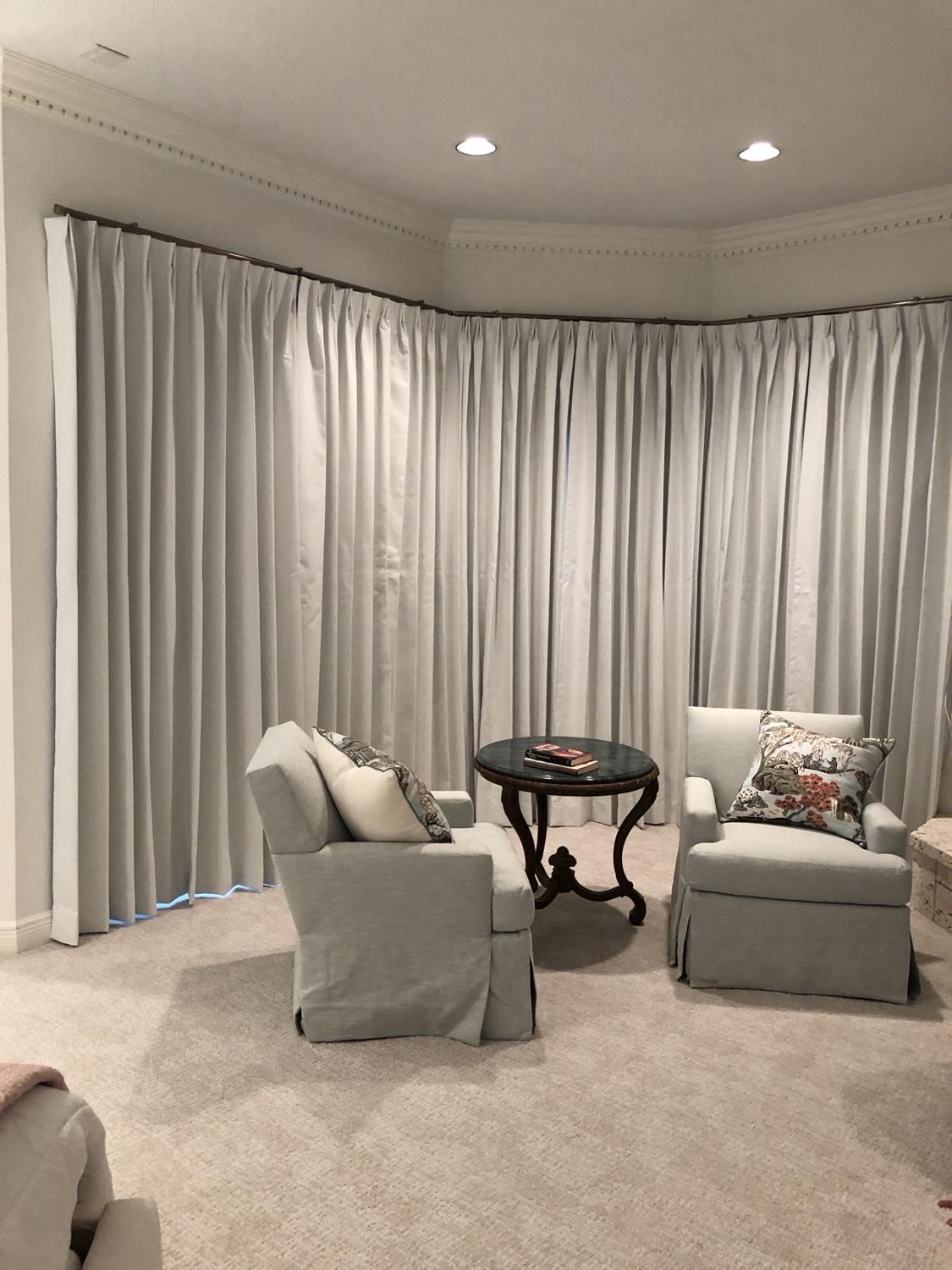
In this sitting area, pale draperies create a continuous backdrop around the chairs. Repeated folds bring rhythm to the angled window wall, while the quiet color lets the furnishings remain the focus. The photograph is a useful starting point for thinking about proportion: a window treatment belongs to the room, not just to the glass.
Plan the open position, too
Before choosing a heading, consider where the fabric will sit when the draperies are open. The stack needs somewhere to go. A center-opening pair creates balance; a one-way arrangement may suit a doorway or an opening with more usable wall space on one side. The mounting surface, available return depth and nearby furniture help determine what is practical.
Let fabric and lining work together
A pale face fabric does not, by itself, tell you how much privacy the finished drapery will provide. Look at the weave and evaluate it with the proposed lining. Hold samples up to the window, then view them beside the wall and furniture. The same cloth can look very different when light passes through it.
The finishing detail
A consistent finished length and a considered relationship to the ceiling make the arrangement feel intentional. Floors and ceilings are not always level, so final measurements should be taken for the actual installation. Discuss your preferred floor clearance and how the room is cleaned before the workroom begins.